Patient engagement has become a pillar of modern healthcare over the past fifteen years. Originally driven by the Affordable Care Act (ACA), which required patient access to healthcare data and incentivized patient-centric care, the concept of patient engagement expanded to become a model of collaboration between medical providers and their patients. Studies have shown that actively engaged patients experience better health outcomes, such as a 2.5 times greater likelihood to adhere to medication regimens1, 12.5% lower hospitalization rates2, and 5.3% lower medical costs.2

A key term in reporting these successes is actively engaged patients. The objective of the ACA’s patient engagement requirements was – and still is – for patients to participate in their own medical care. This means patients who:
To facilitate engagement, many healthcare providers have adopted digital tools, such as the above-mentioned patient portals and mobile apps, and rely on their usage to gauge patient engagement levels. And there is good evidence that patients consume information that is pushed out to them via digital channels. According to one study of over 2,000 orthopedic patients who used their healthcare providers’ digital tools, patients received and read text messages 83% of the time and read emails 84% of the time. However, they responded to only 60% of the text messages they received and 53% of the emails.4
Perhaps most tellingly, patients were least likely to respond to messages that asked them to act, as opposed to those that provided information. Patients read 90% of the information-providing messages they received, but they responded to only 54% of the messages that asked for information or action. They were least likely to respond to messages that asked them to do something, such as register for a class or schedule an appointment.4

It is not surprising that moving patients to action is more challenging than asking them to consume information. And patients certainly receive value from practical information and educational content. But it’s important to understand that patient education and transactional engagement are means to the greater end of patient participation.
The purpose of patient engagement initiatives is to drive active participation that leads to better health outcomes. Although the term patient engagement is meant to represent the collaborative relationship between patients and their healthcare providers, precisely what that entails for each is not always clear. This is perhaps because other, often overlapping, programs like patient education, the patient experience, and patient advocacy have goals that require less from patients, but often get lumped under the patient engagement umbrella.

To be successful, patient engagement must progress to patient participation. It must influence behavior and spur patients to take steps that will aid recovery. This is not easy to achieve in any healthcare setting, and especially not easy in the complex environment of workers’ compensation healthcare.
At a time when claim complexity is increasing, an injured worker patient who takes an active role in treatment can be the difference between a rapid recovery and return to work and an extended duration, high-cost claim.
Engaged injured workers who actively participate in their recovery reap the same benefits as engaged general healthcare patients. However, unlike medical providers and facilities that can engage patients who are directly under their care, workers’ compensation payers must manage care for patients across multiple providers, all delivering different services. The fragmented nature of the healthcare system makes it difficult for payers to integrate with provider networks, each with its own silos of specialized care, using their own systems for maintaining records and communicating with patients. All of which makes it challenging to monitor care and engage injured workers in real time.
In addition to the structural and administrative obstacles, workers’ comp payers must also contend with personal challenges that can prevent injured worker patients from positively participating in their medical care, including:

Psychological barriers: Depression and anxiety, stress related to income and potential job loss, mistrust in the system, feelings of helplessness, and fear of re-injury are common afflictions that can stimy positive action from injured workers.

Low medical/health literacy: Whether due to language barriers or simply having little experience with health issues, injured workers who don’t fully understand their conditions and prescribed treatments are likely to lack motivation to participate.

Limited digital proficiency or participation: Payers and providers rely heavily on digital communications, and increasingly on AI tools, which can be a stumbling block for injured workers who lack proficiency. Technologically proficient patients are sometimes reluctant to use digital tools for healthcare matters due to privacy concerns or frustration when tools fail to address their individual circumstances.

Difficulty navigating the system: Even injured workers who face none of the above barriers can have difficulty navigating the complex workers’ comp system. Patients may want to do the right things but may not know how. Misinformation, communication delays, and conflicting or confusing messaging from multiple sources can prevent patients from actively engaging simply because they don’t know what to do.
Despite the many complexities within workers’ comp, however, driving meaningful action that improves injured workers’ health outcomes is still possible when the right strategies are employed.
The goal of patient participation is to encourage and influence injured worker behaviors that positively impact recovery. A range of behaviors – from downloading patient education materials to taking medication as prescribed – can impact an injured worker’s recovery. In an ideal world, they could all be changed for the better. Realistically, however, success is optimized by creating a list of key performance indicators (KPIs), which in this context are those actions that aid recovery, can be influenced, and are measurable.
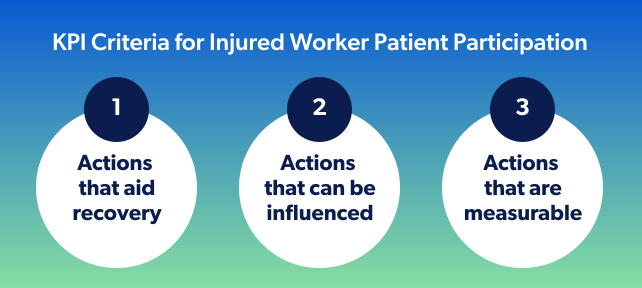
Some injured worker behaviors that meet these criteria are:
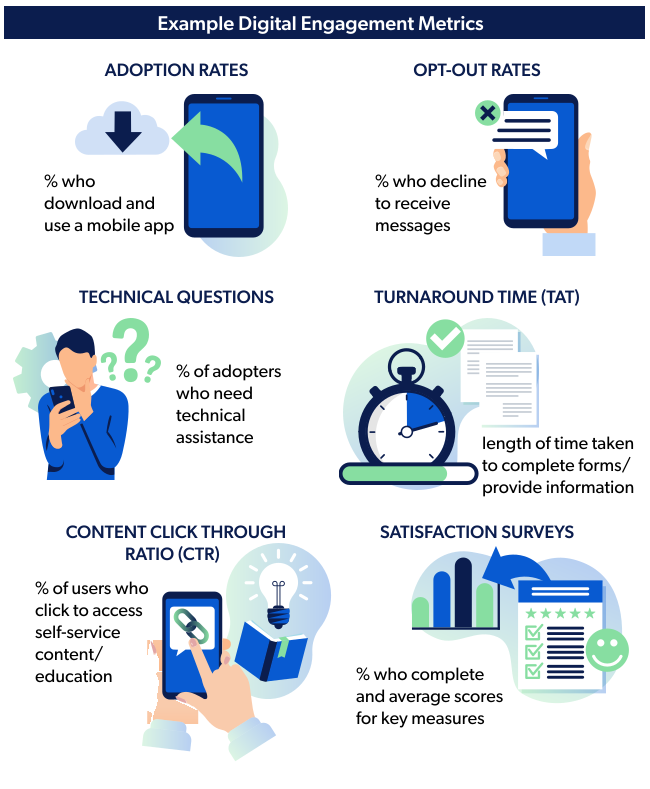
The next step is to evaluate how influencing these behaviors could assist in achieving strategic goals. What actions by injured workers could potentially reduce cost drivers, speed recovery, improve functionality, etc.? Then lay out the desired actions and measures of success.
Clicks, downloads and/or time spent viewing content
Provider recommendation accepted yes/no Appointments made and kept
Patient self assessments and/or self-reported barriers
Quantitative response to text messages (i.e. on a scale of 1-5 how well did you complete your PT exercise this week)
Physical therapy progress reports
Patient report outcomes
Provider recommendation accepted yes/no Appointments made and kept
MME levels/Opioid prescription rates among targeted group members
As noted earlier, injured worker patients can experience a variety of challenges that prevent them from actively participating in their care and recovery. Effective communication strategies can help alleviate those challenges, build trust, and motivate positive action. Allowing that live conversation between one human being and another can be highly effective and should take place whenever possible; however, the realities of modern life and time constraints of claims and case management professionals make regular conversations impractical.
Fortunately, there are some highly effective digital communication strategies that payers and their partners can employ, including:

Mobile apps: 94% of injured workers use their cell phone often.5 The ability to access information, keep track of appointments, complete forms, receive alerts and reminders, and communicate directly with claims adjuster through convenient mobile apps empowers injured worker patients to participate more easily.

Text messages: Text messaging has become the communication method of choice for over 85% of healthcare patients,6 due to its speed and convenience. Texts can be used to remind injured worker patients of appointments, point them to network pharmacies and providers, send messages of encouragement, and more.

Personalized messaging: 92% of patients expect targeted, personalized healthcare messages.7 General messages for whole patient population segments have their place, but messages that are tailored to individual injured workers are more effective for prompting action and building trust.

Patient portals: Secure portals where patients can review their claim information, access educational resources, track progress and appointments, provide feedback, etc. can act as a home base for patients to stay informed and instill confidence that their care management is under control.

Online support groups: Connecting with other injured workers and related professionals, such as wellness coaches, can ease feelings of isolation, inspire healthy behaviors, and improve satisfaction.

Address digital proficiency: While most injured worker patients use digital channels, including text messaging, mobile apps, and websites, some are more tech savvy than others. Intuitive designs, simple language, and providing guides and tutorials can improve proficiency and drive greater usage.
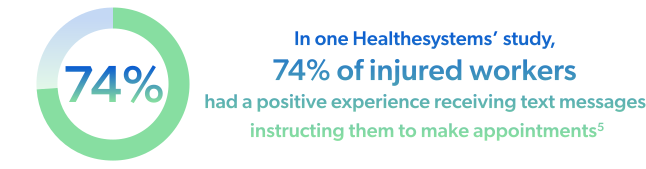
Every injured worker patient has their own needs, health and fitness levels, proficiencies, preferences, and idiosyncrasies. Using analytics to identify injured workers who meet certain criteria and targeting them with relevant messaging is the most important factor to prompting positive participation. However, no single tool or tactic is going to work for every member of a given group.
A key advantage to digital engagement strategies is the ability to make iterative adjustments in response to the data. Patterns are likely to emerge, such as higher participation rates among injured workers over 35, or lower response rates to texts sent after 5:00 p.m. These data points can inform strategies and drive continuous improvement.
Adjustments may also be needed in response to changing trends among patient populations, healthcare providers, regulatory environments, and more. Strategic goals, KPIs, communication channels and messaging should be reviewed regularly and revised as often as necessary to stay current and relevant. Results will quickly diminish if communications become stale or are out of sync with the target audience.
Digital patient engagement strategies can inform, engage, and inspire participation among injured worker patients, as demonstrated by these examples:
Payers and their vendor partners can collaborate to set goals and form strategies employing a variety of digital tools and minimizing resource investments. By setting strategic goals, applying KPIs that support those goals, and igniting injured worker participation, payers and their partners can improve health outcomes, shorten claim duration, and reduce costs.

